Rent or Buy an Instrument? The Honest Math (2026)
Instrument rental runs about $19 to $32 a month for violin or trumpet and $93 to $170 for tuba. Here is the break-even point, and when renting is clearly the better buy.
Renting costs roughly $19 to $32 a month for a violin, trumpet, or trombone and $93 to $170 for a tuba or bassoon, per published 2025 rate charts. Buying wins on cheap instruments within about a year. Renting wins on four-figure instruments, on growing children who need fractional sizes, and on any instrument the child did not choose.
The price spectrum, per month by tier
Violin, trumpet, flute, clarinet
$19–$32
Per month. The small instruments, where buying outright overtakes renting inside a single school year. Rent the first term if you must, then buy.
Cello, oboe, percussion kit
$36–$49
Per month. Fractional sizes and a four-figure purchase price both push toward renting while the player is still growing or still deciding.
Tuba, double bass, french horn, bassoon
$58–$170
Per month. The instruments almost nobody buys first. Break-even against purchase sits around two years, and the repair risk stays with the shop.
| Tier | Typical price | What you get |
|---|---|---|
| Violin, trumpet, flute, clarinet · best value | $19–$32 | Per month. The small instruments, where buying outright overtakes renting inside a single school year. Rent the first term if you must, then buy. |
| Cello, oboe, percussion kit | $36–$49 | Per month. Fractional sizes and a four-figure purchase price both push toward renting while the player is still growing or still deciding. |
| Tuba, double bass, french horn, bassoon | $58–$170 | Per month. The instruments almost nobody buys first. Break-even against purchase sits around two years, and the repair risk stays with the shop. |
Every September the same question lands on the same kitchen table. The school sent home a form, the child has been assigned a clarinet, and the shop offers to rent one for $28 a month or sell one for $600. Which is cheaper?
The arithmetic is easy. The answer is not, because the cheapest option and the right option are frequently different things.
What rental actually costs
Published rates from two shops, both read in July 2026:
| Instrument | Monthly rental | Buy new (student) |
|---|---|---|
| Violin, viola | $19–$29 | $120–$500 |
| Trumpet, cornet | $22–$32 | $200–$800 |
| Trombone | $22–$32 | $500–$1,500 |
| Clarinet (plastic) | $22–$32 | $200–$900 |
| Flute | $22–$32 | $200–$900 |
| Snare or percussion kit | $19–$29 | $300–$800 |
| Cello | $36–$49 | $400–$2,000 |
| Oboe | $36–$49 | $1,000–$3,000 |
| French horn (double) | $58–$86 | $1,200–$3,500 |
| Double bass | $58–$86 | $1,000–$4,000 |
| Tuba, bassoon | $93–$170 | $1,000–$5,000 |
Rental figures are from Hickey’s Music Center’s rate chart effective August 2025. Purchase figures are the student tier from each instrument’s page on this site, checked July 2026. A&G Central Music quotes a similar shape: $25 a month for violin, $40 for cello, $85 for bass, and $35 to $150 across winds and percussion.
The break-even, instrument by instrument
Divide the purchase price by the monthly rental and you get the month at which buying would have been cheaper.
A violin at $200 against $24 a month breaks even in about eight months. A trumpet at $400 against $27 breaks even in fifteen. A tuba at $3,000 against $130 breaks even at twenty-three months, and that is before you count the repair bill you now own.
So the rough rule: on instruments under about $800, buying wins inside a school year. On four-figure instruments, renting stays competitive for two years or more.
That rule has three exceptions, and the exceptions matter more than the arithmetic.
When renting is right even though it costs more
The child is still growing. Violins, violas, and cellos come in fractional sizes from 1/16 up to full. A seven-year-old on a 1/2-size violin will need a 3/4 within a couple of years and a 4/4 after that. Buying three instruments to cover that is absurd; rental programs swap sizes as the child grows, usually at no extra cost. This alone settles the question for most young string players.
The child did not choose the instrument. Band assignment is not the same as enthusiasm. If the school handed your child a French horn because the section needed one, the odds they are still playing it in three years are meaningfully lower than for a child who asked for a guitar. Renting is how you buy an option instead of an obligation.
The instrument is expensive and fragile. Maintenance is where rental quietly earns its money. A&G includes maintenance and fire and theft cover in the fee. Hickey’s offers a warranty at $8 to $25 a month. Own the instrument and a seized valve, a cracked wood joint, or a bow rehair is yours: a rehair alone runs $40 to $80, and a pad job on a woodwind runs into the hundreds.
When buying is clearly right
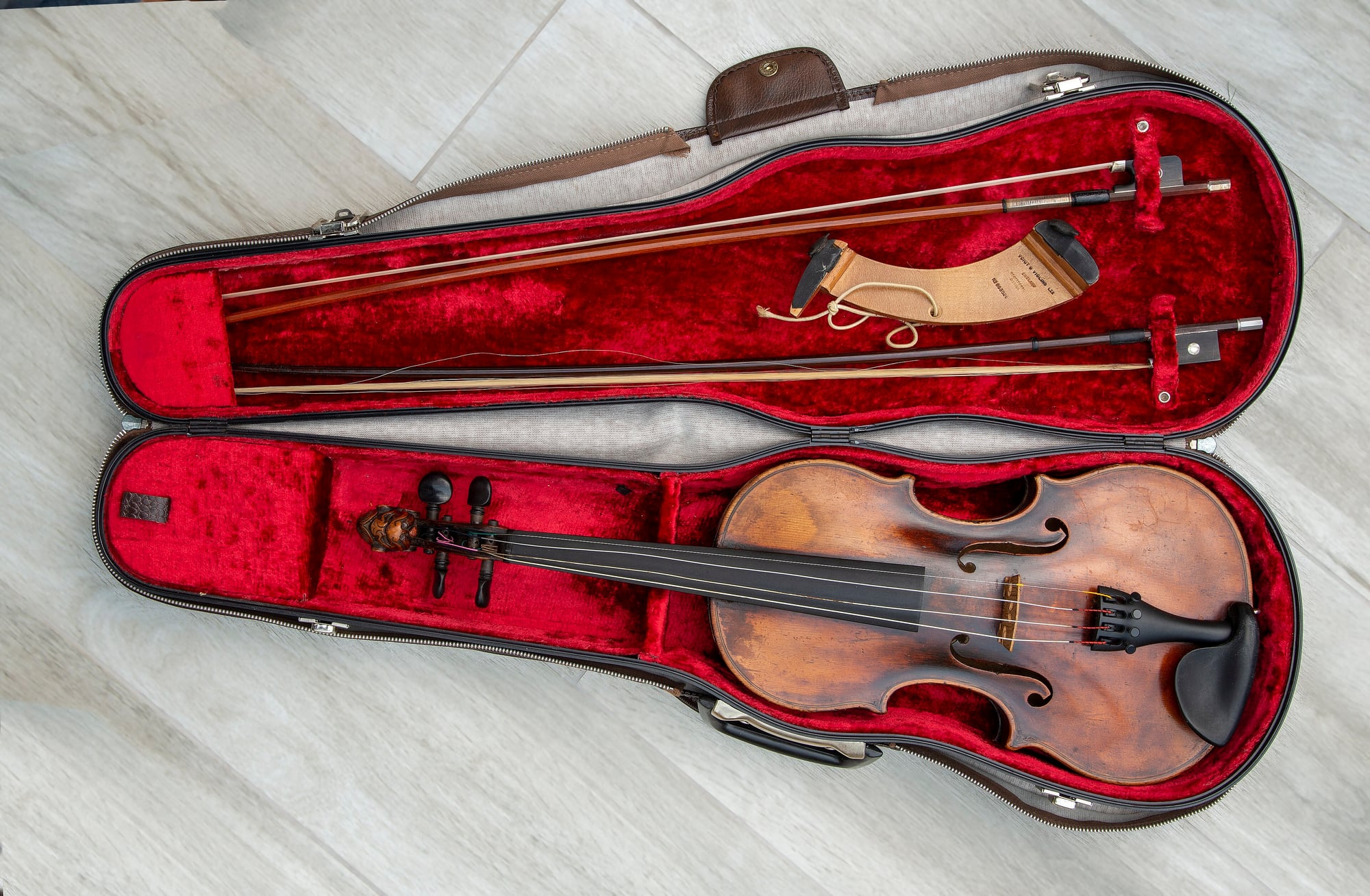
Buy when the instrument is cheap, the size is final, and the player has already stuck with it. A full-size violin for a committed 14-year-old, a $250 used Yamaha trumpet, a plastic clarinet for a student who has played a year: in each case rental is just a more expensive way to end up in the same place.
Buy used, too. A well-kept used student instrument from a shop that has serviced it typically undercuts new by a wide margin and skips the worst of the depreciation. That is a whole decision of its own, laid out on the used versus new page.
The rent-to-own trap, and how to check for it
Rent-to-own sounds like renting with the purchase thrown in free. It is not quite that.
Payments build equity, and shops do apply it. A&G states plainly that all rental payments build equity toward a purchase and that band students get a 30 percent purchase discount at any time. Good terms. But the total you pay across two or three years of rent-to-own is generally higher than the outright price would have been, because you are paying for the convenience, the swaps, and the maintenance along the way.
That is a fair trade when you use those things. It is a poor one when the child settled on the instrument in month three and you kept paying until month thirty.

Three questions to ask before signing:
- How much of each payment becomes credit, and does the credit expire? Some plans cap it, some apply only a portion, some stop accruing after a set term.
- What is the total if I buy out today versus in a year? Ask for both numbers in writing.
- What does the maintenance actually cover? Accidental damage, or only mechanical failure? This is where plans differ most.
The practical answer for most families
Rent for the first year on anything four figures, anything fractional-sized, and anything the child was assigned rather than asked for. Buy outright, and buy used, once the instrument is the right size and the player has proven they will keep going.
And check the buyout number every year. The most common way families overpay is not choosing wrong at the start. It is renting for three years on an instrument the child decided they loved in the first three months.
If you decide to buy
Buying makes sense on the cheaper instruments and on anything the player has already committed to. Prices are typical Amazon ranges as of July 2026; confirm at checkout.
As an Amazon Associate, SoundPretty earns from qualifying purchases.
- A complete student violin outfit
At $120 to $500, a violin outfit pays for itself against rental in roughly six to eighteen months.
- A Yamaha or Bach student Bb trumpet
About eight to twelve months of rental. A well-kept used Yamaha is the strongest value on the whole brass shelf.
- A Yamaha or Buffet student clarinet
Plastic for a first clarinet. Roughly a year of rental payments buys one outright.
- An instrument care and cleaning kit
The thing rental includes and ownership does not. Budget for it the day you buy rather than the day something sticks.
Prices vary by brand, condition, and region. These figures were checked against manufacturer and major-retailer listings in July 2026; confirm current pricing with the retailer before you buy.
A few more questions
Do rental payments count toward buying the instrument?
At many shops, yes. A&G Central Music states that all rental payments build equity toward a purchase and that band students receive a 30 percent purchase discount at any time. Terms vary by shop, so ask exactly how much credit accrues and whether it expires before you sign.
Is rental insurance worth it?
It is usually bundled rather than optional, and that is most of rental's real value. A&G includes maintenance and fire and theft coverage in the rental fee; Hickey's sells a separate warranty at $8 to $25 a month. A single dented trumpet bell or unseated cello soundpost can cost more than a year of coverage.