Beginner Instrument Cost: What Each One Starts At (2026)
What a first instrument costs in 2026, ranked: guitar from $100, violin from $120, clarinet and trumpet from $200, cello from $400, and french horn from $1,200.
The cheapest honest entry points in 2026 are guitar at $100 to $350 and violin at $120 to $500. Clarinet and trumpet start near $200, cello near $400, and the big orchestral instruments run four figures: french horn from $1,200, tuba and harp from $1,000. Every figure below is the playable floor, not the marketplace floor.
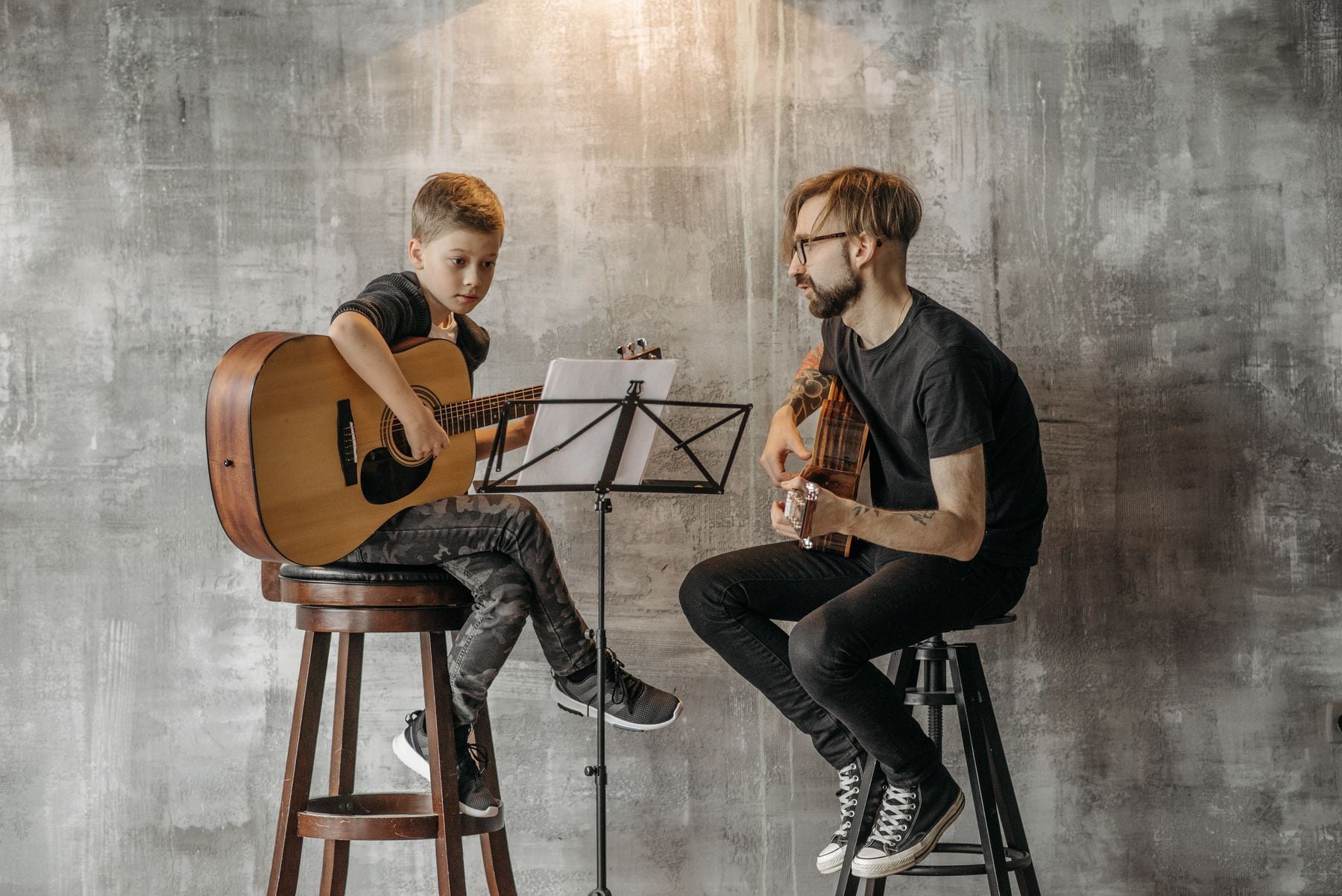
The price spectrum, first instrument by tier
Under $500
$100–$500
Guitar, violin, clarinet, trumpet, and a starter drum kit. All five have a genuinely playable instrument at this level from a brand a repair tech recognises.
$500 to $2,000
$500–$2,000
Cello, trombone, and a weighted digital piano. Bigger instruments, more material, and a setup step that costs real money.
$1,000 and up
$1,000–$5,000
French horn, tuba, oboe, double bass, and harp. These have no budget end. A four-figure number is the honest starting point, which is why renting dominates here.
| Tier | Typical price | What you get |
|---|---|---|
| Under $500 · best value | $100–$500 | Guitar, violin, clarinet, trumpet, and a starter drum kit. All five have a genuinely playable instrument at this level from a brand a repair tech recognises. |
| $500 to $2,000 | $500–$2,000 | Cello, trombone, and a weighted digital piano. Bigger instruments, more material, and a setup step that costs real money. |
| $1,000 and up | $1,000–$5,000 | French horn, tuba, oboe, double bass, and harp. These have no budget end. A four-figure number is the honest starting point, which is why renting dominates here. |
Every instrument has a price below which you are not buying an instrument. You are buying an object shaped like one. That floor is different for a guitar than for a tuba, and nobody tells you where it sits until you have already spent the money.
So here is the whole beginner range in one place, cheapest first. Each number is the student tier from that instrument’s own page on this site, checked against maker and retailer listings in July 2026.
What every beginner instrument costs, ranked
| Instrument | Honest starting price | What that buys |
|---|---|---|
| Guitar | $100–$350 | A playable steel-string or classical acoustic from a real brand |
| Violin | $120–$500 | A set-up outfit: violin, bow, case, rosin |
| Trumpet | $200–$800 | A Bb student horn from Yamaha, Bach, or Jupiter |
| Clarinet | $200–$900 | A plastic (ABS) student clarinet, not wood |
| Drum set | $300–$800 | A starter kit with shells, hardware, and basic cymbals |
| Piano | $350–$1,500 | A weighted 88-key digital piano |
| Cello | $400–$2,000 | A student outfit with bow, soft case, and rosin |
| Trombone | $500–$1,500 | A student tenor, usually without an F-attachment |
| Oboe | $1,000–$3,000 | A student oboe, with a good one nearer $1,700 |
| Double bass | $1,000–$4,000 | A student upright, plus a bow |
| Tuba | $1,000–$5,000 | A student BBb, often bought used or supplied by the school |
| Harp | $1,000–$5,000 | A lever harp, which is where nearly every harpist starts |
| French horn | $1,200–$3,500 | A student single or a starter double horn |
Two things jump out of that table. The gap between the cheapest and the dearest first instrument is more than tenfold. And the four-figure instruments are all orchestral or band instruments a child is usually assigned rather than choosing, which is exactly why school rental programs exist.
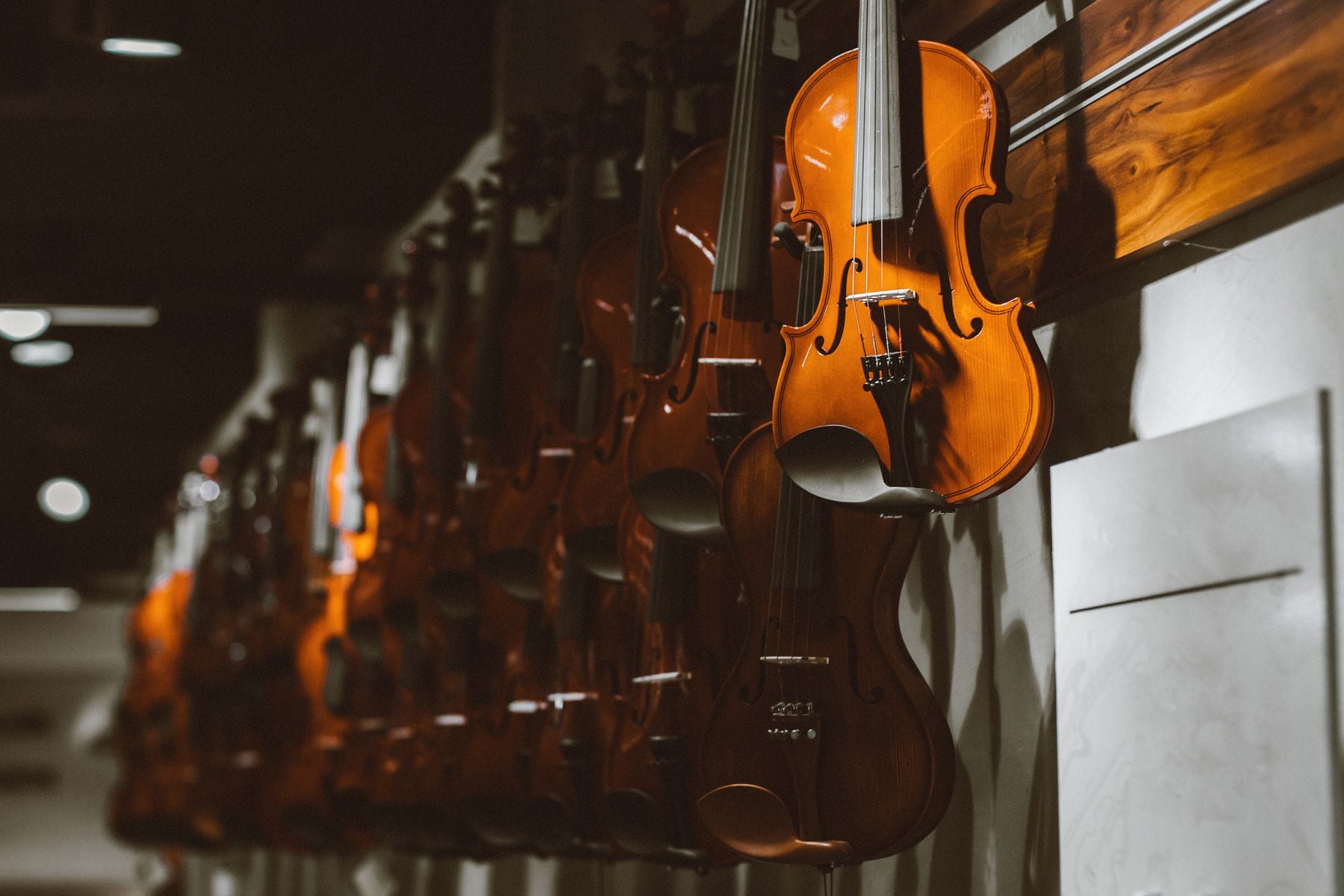
The floor is not the same as the cheapest listing
Search any of these instruments and you will find something for half the low number in that table. A $50 “violin,” a $120 “tuba,” a $60 “clarinet.” These arrive with warped bridges, pads that leak, valves that stick, and intonation no beginner could correct even if they knew how.
A band teacher will often refuse to work with one, and that is the real cost. The instrument does not just sound bad. It teaches a new player that they cannot do this, and they quit. Every price in the table above is the point where the instrument stops fighting the student.
Where the money actually goes
Three things drive the entry price up, and they are the same three across every family.
Size and material come first. A tuba contains many times the brass of a trumpet, and a double bass many times the wood of a violin. That is most of the difference between the top and bottom of the table.
Then there is setup. String instruments and woodwinds need a person to fit the bridge, place the soundpost, seat the pads, or dress the keys before they play properly. A well-set-up $300 violin outsings a neglected $1,000 one. That labour is bundled into the price when you buy from a real shop and absent when you buy from a marketplace.
Last is what comes in the box. A violin or cello at these prices is sold as an outfit, so the bow and case are included. A trumpet or clarinet usually includes a case and a basic mouthpiece. A drum kit at $300 often does not include decent cymbals, which is the single most common surprise on this list.
What to add to the number
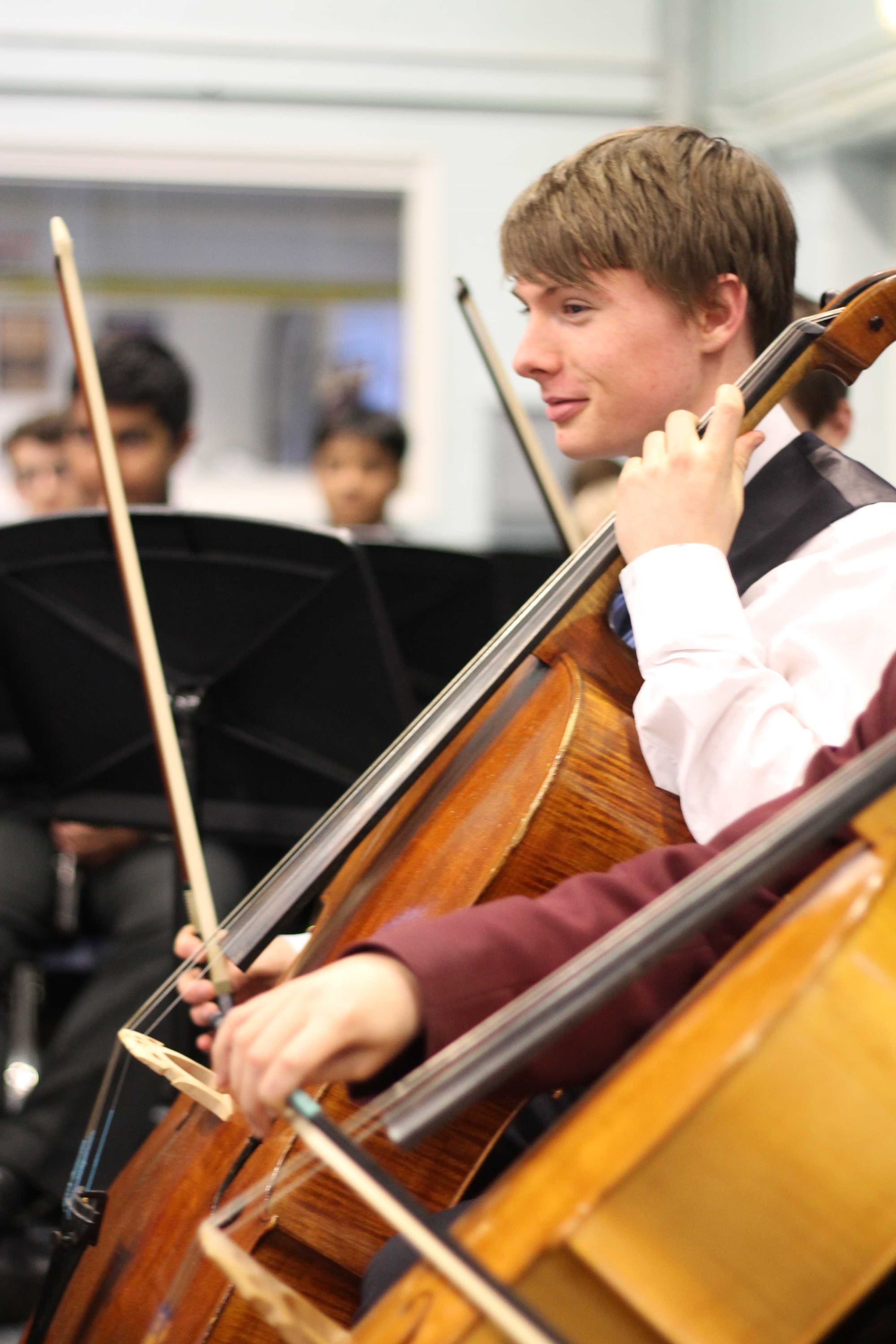
Nearly every instrument here has a running cost that beginners forget:
- Strings wear out every 6 to 12 months. A violin set is $15 to $30, a cello set $50 to $150.
- Reeds wear out in weeks. A box of 10 student clarinet reeds runs $15 to $30, and oboe reeds are worse because they are handmade.
- Valve oil, rosin, cork grease are a few dollars each, and the instrument does not work without them.
- A music stand is $20 to $60 and nobody budgets for it.
Add 10 to 20 percent to the instrument price for the first year of consumables and you will be close.
When renting beats buying outright
For the bottom half of that table, buying usually wins. A $200 trumpet costs about eight months of rental, and you own it.
For the four-figure instruments it flips. Renting a tuba, a double bass, or a French horn is how most families handle an instrument the child was assigned and may not stick with. Published rates put a violin or trumpet around $19 to $32 a month and a tuba at $93 to $170 a month, per Hickey’s Music Center’s rate chart effective August 2025. That tuba rental looks expensive until you compare it with a $3,000 purchase for an instrument a 12-year-old might drop in a year.
The full comparison, including how rent-to-own credit works, is on the rent or buy page.
If the budget is genuinely tight
Buy used before you buy cheap. A used $300 student violin from a shop that has set it up beats a new $120 one from a marketplace, every time. The same holds for trumpets, clarinets, and especially pianos, where a used acoustic sells for far less than new.
The one thing not to do is split the difference by buying the cheapest new thing you can find. That is the purchase most likely to end up unused in a closet within a year, and it is the reason this site exists.
The starter buys that hold up
These are the entry instruments worth owning rather than replacing in a year. Prices are typical Amazon ranges as of July 2026; confirm at checkout.
As an Amazon Associate, SoundPretty earns from qualifying purchases.
- A complete student violin outfit
Violin is the cheapest orchestral entry that is still a real instrument. An outfit bundles the bow, case, and rosin so nothing is missing on day one.
- A beginner acoustic guitar
The lowest honest floor of any instrument here. Yamaha's entry acoustics are the standard recommendation and hold resale value.
- A Yamaha or Buffet student clarinet
Plastic, not wood, for a first clarinet. It survives a school bag and plays in tune, which the sub-$100 models do not.
- A weighted 88-key digital piano
For piano, the digital is not a compromise. Fully weighted hammer-action keys are the one specification to insist on.
Prices vary by brand, condition, and region. These figures were checked against manufacturer and major-retailer listings in July 2026; confirm current pricing with the retailer before you buy.
A few more questions
Which instrument is cheapest to start on?
Guitar, at $100 to $350 for something genuinely playable. Violin is next at $120 to $500 and is the cheapest way into an orchestra. Both have the advantage that the entry instrument is a real instrument, not a compromise you replace within a year.
Does a more expensive beginner instrument help a child learn faster?
Up to a point, and then it stops mattering. The jump from a $60 marketplace instrument to a $250 branded one is enormous, because the cheap one often cannot be tuned. The jump from $250 to $800 is real but much smaller, and past that a beginner will not hear the difference for a few years.